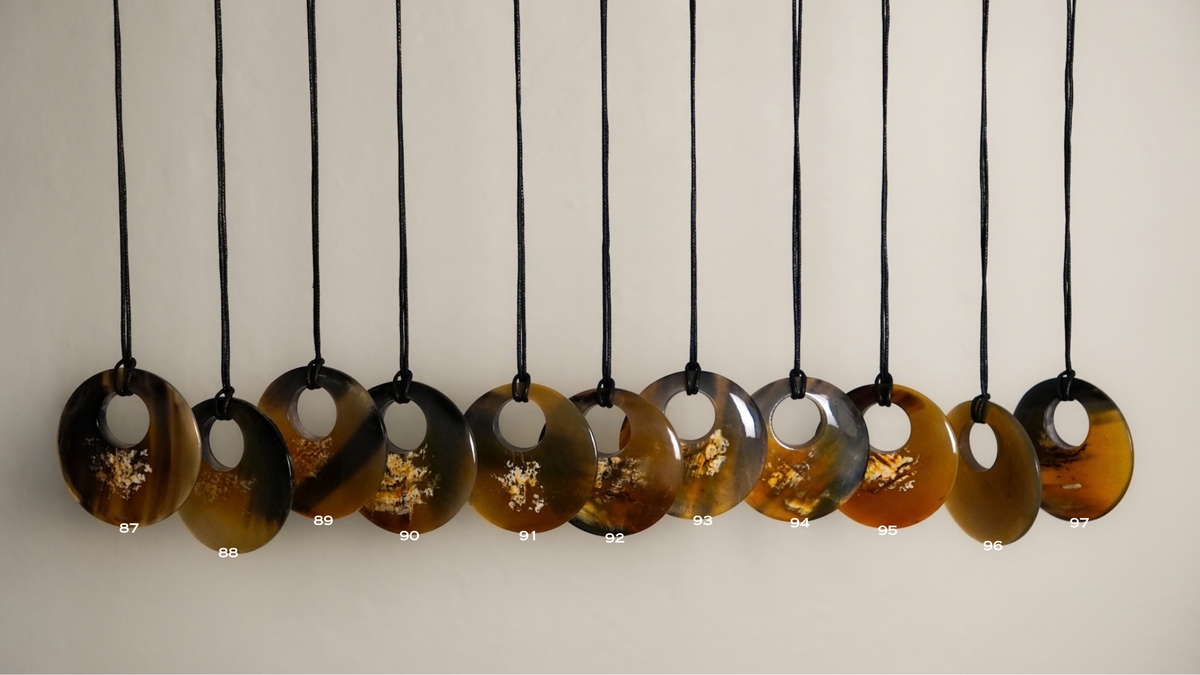
The PUHÓN Necklace
The PUHÓN Necklace
EDITOR'S NOTE
EDITOR'S NOTE
In the Philippines, where dawn breaks gently over rice fields and the horizon glows like a promise, there stands a hero carved from earth: the carabao. To outsiders it is merely a beast of burden, but to generations of Filipino farmers, the carabao is kin — an emblem of endurance, humility, and the stubborn hope that life, if worked for, will grow.
The carabao’s slow, deliberate steps mirror the rhythm of rural life. It does not rush; it endures. It does not boast; it simply carries on. Its sweat watered our fields long before tractors learned to roar. Its strength pulled harvests that nurtured generations of Filipinos.
To honor the carabao is to honor the Filipino spirit — persistent in hardship, steadfast in labor, and faithful to the land that raised it. A part of honoring the passing of a carabao is vested into the hands of Filipino artisans. In skilled Filipino hands, what was once part of a humble animal becomes something more: a tambuli that calls a community together; the handle of a farmer’s bolo; the ornament on a warrior’s belt; the trinket passed down as an heirloom.
Each crafted horn is a fragment of history. That’s why KADIWA The Label partnered with artisans from Macabebe, Pampanga to bring the PUHÓN necklace to life, borrowing their name from a Visayan word that carries both prayer and patience: puhon — “God willing,” “in God’s time.”
And so the carabao horn, once shaped by the earth, now circles the neck as a promise:
That in God’s time, all things will come.
COMPOSITION
COMPOSITION
Directly and ethically-sourced natural carabao horn from Philippine farmers; 100% cotton lanyard
CARE INSTRUCTIONS
CARE INSTRUCTIONS
To restore the natural luster of the PUHÓN necklace, occasionally buff the surface with a slightly damp cloth and apply a small amount of coconut oil. Wipe away any excess after polishing. Avoid soaking, excessive moisture, harsh chemicals, and prolonged exposure to heat.
ETHICS AND SUSTAINABILITY
ETHICS AND SUSTAINABILITY
Cutting or removing a live carabao’s horns strictly for aesthetic or commercial craft purposes violates Republic Act No. 8485 (The Animal Welfare Act of 1998). This law prohibits the torture, maltreatment, or infliction of unnecessary pain on animals. The only time dehorning a live carabao is legally permitted is for veterinary health or safety reasons (e.g., preventing injuries to handlers or other livestock), and it must be done using proper medical procedures. Since carabao is a major source of meat in the Philippines, their horns and hides are considered agricultural byproducts. Roughly 300 to 400 carabaos are legally slaughtered every day to meet the country's demand for carabao meat, while the rest die daily due to a mix of natural causes and climate stress.
SHIPPING DETAILS
SHIPPING DETAILS
The PUHON Necklace ships in 5 to 7 business days.
Couldn't load pickup availability